Irritable bowel syndrome affects approximately 10 to 15 percent of the global population, making it one of the most common gastrointestinal conditions worldwide. Despite its prevalence, IBS management remains largely symptomatic — antispasmodics for cramping, laxatives for constipation, antidiarrhoeals for loose stools, and low-FODMAP dietary restriction as a management strategy. For many patients, these approaches provide partial and often temporary relief. For a significant proportion, they fail entirely.
The reason is straightforward: medication-based IBS management treats symptoms while leaving the underlying biological drivers completely unaddressed. Understanding what actually causes IBS — and why those causes require more than pharmacological symptom suppression — is essential for anyone who has been living with inadequately managed IBS.
IBS has traditionally been defined as a functional gastrointestinal disorder — meaning a condition characterised by abnormal gut function without identifiable structural abnormality. This definition, while technically accurate, has historically led to an approach focused on managing symptoms rather than identifying and treating root causes.
The limitation of this approach is reflected in patient outcomes: surveys consistently show that a majority of IBS patients are dissatisfied with current treatments, and many report that their quality of life remains significantly impaired despite medical management. The reason is that IBS is not a single condition with a single mechanism — it is a clinical syndrome produced by several distinct underlying biological disruptions, each requiring different targeted interventions.
Modern gastroenterological research has identified multiple biological mechanisms underlying IBS presentations. Gut microbiome dysbiosis is among the most important — disrupted microbial communities producing altered gut motility through changed serotonin and GABA production, visceral hypersensitivity through mast cell-histamine activation, and increased intestinal permeability generating systemic inflammation.
Small intestinal bacterial overgrowth, present in an estimated 30 to 80 percent of IBS patients depending on diagnostic criteria, introduces large bacterial populations into the small intestine where they ferment carbohydrates and produce gases driving the bloating, pain, and altered bowel habits of IBS. Standard IBS medication does not address SIBO — antimicrobial treatments targeting the bacterial overgrowth are required.
Food sensitivities — both IgE-mediated and IgG-mediated delayed reactions — drive gut immune activation, mast cell degranulation, and visceral inflammation in a substantial proportion of IBS patients. Standard medication provides no information about which foods are driving immune activation, and dietary advice based on FODMAP content without food sensitivity testing leaves immunologically reactive foods in the diet.
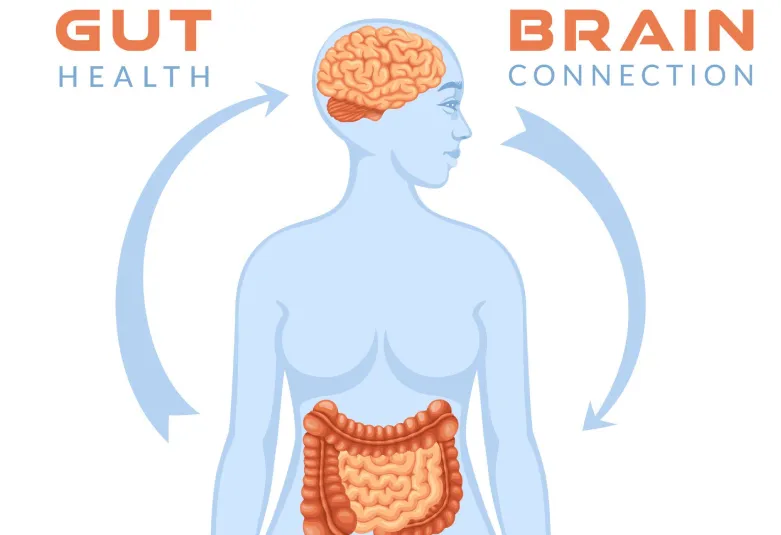
Serotonin dysregulation — altered gut serotonin production, signalling, and reuptake — drives the abnormal motility and visceral sensation of IBS through the enteric nervous system. The gut microbiome is the primary regulator of enterochromaffin cell serotonin production, meaning that gut microbiome restoration addresses the upstream biological cause of IBS serotonin dysregulation rather than simply modulating serotonin receptors pharmacologically.
The gut microbiome is an ecosystem containing trillions of microorganisms in complex, interdependent relationships. Restoring a damaged ecosystem requires restoring the conditions that support its health — dietary fibre diversity, prebiotic substrates, probiotic replenishment, and the removal of ongoing damaging factors. No medication in current use accomplishes this restoration.
Antispasmodics reduce cramping but do not address the dysbiotic mast cell activation driving visceral hypersensitivity. Laxatives stimulate bowel movements but do not address the altered gut motility that produces constipation-predominant IBS. Antidiarrhoeals slow gut transit but do not address the microbial fermentation driving loose stools. Each medication addresses a symptom downstream of the real biological problem.
For IBS patients frustrated by inadequate symptom control, comprehensive assessment combining gut microbiome analysis, SIBO testing, food sensitivity testing, and intestinal permeability measurement provides the complete biological picture that symptom-based diagnosis cannot offer. This assessment routinely reveals specific bacterial overgrowths, depleted beneficial populations, food sensitivity patterns, and barrier dysfunction that targeted interventions can address.
Patients who pursue this comprehensive approach frequently describe transformative improvements — not the partial, temporary relief of symptom management, but the genuine resolution of IBS that occurs when its biological root causes are identified and treated.
A comprehensive IBS treatment approach combines gut microbiome restoration through dietary diversity and targeted probiotic supplementation; SIBO identification and treatment where present; food sensitivity testing and elimination of immunologically reactive foods; intestinal permeability restoration through nutritional and dietary support; and gut-brain axis management through stress reduction and neurotransmitter support.
This multi-component approach requires assessment and professional guidance but produces outcomes that symptom management alone consistently fails to achieve — because it addresses IBS where it actually begins, in the biological disruptions that drive every symptom downstream.
IBS is not an incurable condition requiring lifelong symptom suppression. It is a biological syndrome produced by identifiable, treatable disruptions in gut microbiome health, intestinal barrier function, food immune responses, and enteric neurotransmitter regulation. For the millions of IBS patients whose symptoms remain inadequately managed, comprehensive root-cause testing is the investigation that changes everything.
Written by: Dr. Bakshi's Advance Diagnostics Team
Reviewed by: Certified Health Experts
Published: April 2026
This article is written and reviewed by the expert team at Dr. Bakshi's Advance Diagnostics, specializing in advanced diagnostic testing including gut health, food intolerance, and genetic testing.